Find your feet
How to Build Confidence as a Junior Business Analyst
Work through a vague dashboard request and use a five-question checklist to clarify what stakeholders need before you start writing.
Read the junior BA field guideNew to business analysis or working through a BA task for the first time? Find examples of what to ask in a workshop, what to hand over to a delivery team and how to get oriented on a new project.
Find your feet
Work through a vague dashboard request and use a five-question checklist to clarify what stakeholders need before you start writing.
Read the junior BA field guideWrite clearer requirements
Write testable requirements, choose a useful diagram and leave the team with a clear record of what’s agreed and what’s open.
Read the requirements handover guideWorked examples and checklists for requirements, stakeholder work and project decisions.
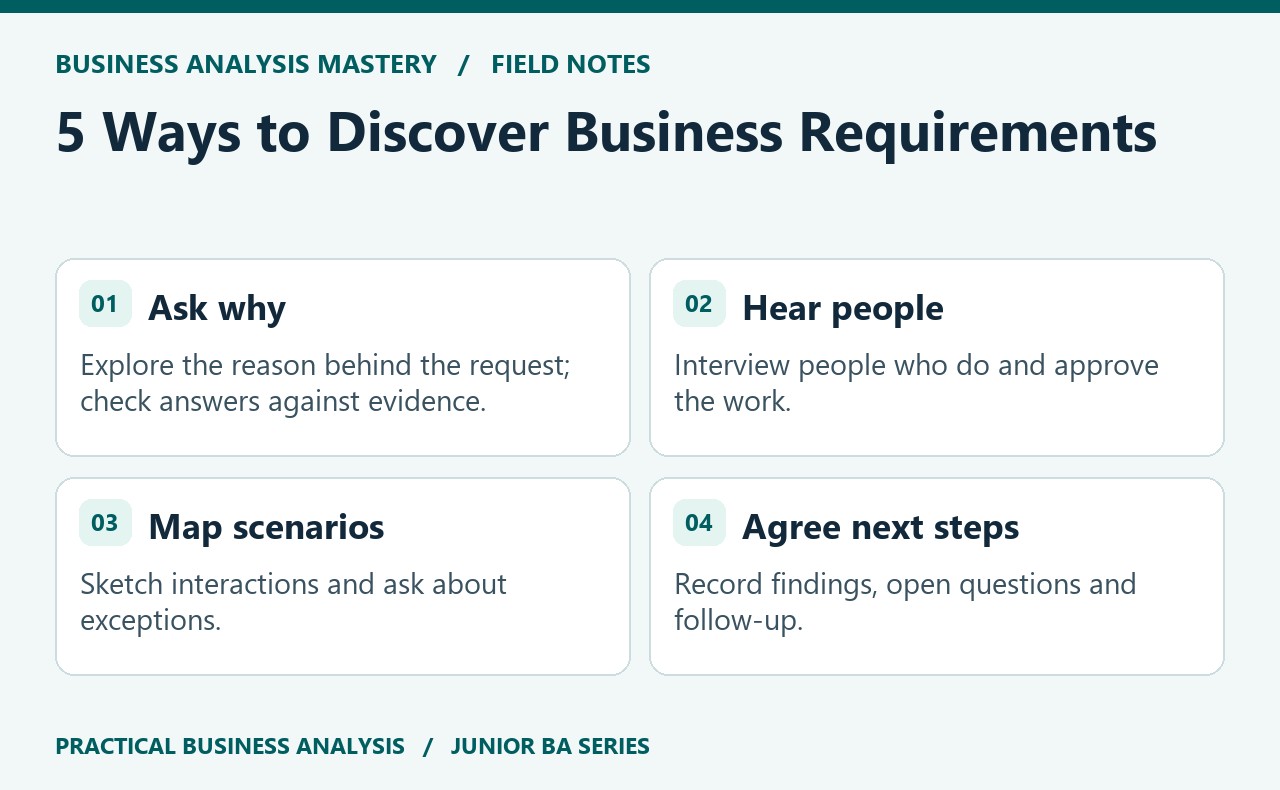
Requirement discovery helps you understand the outcome people need before the team settles on a solution. These five techniques give you different ways to explore the problem, hear perspectives and identify what still needs checking.
Read article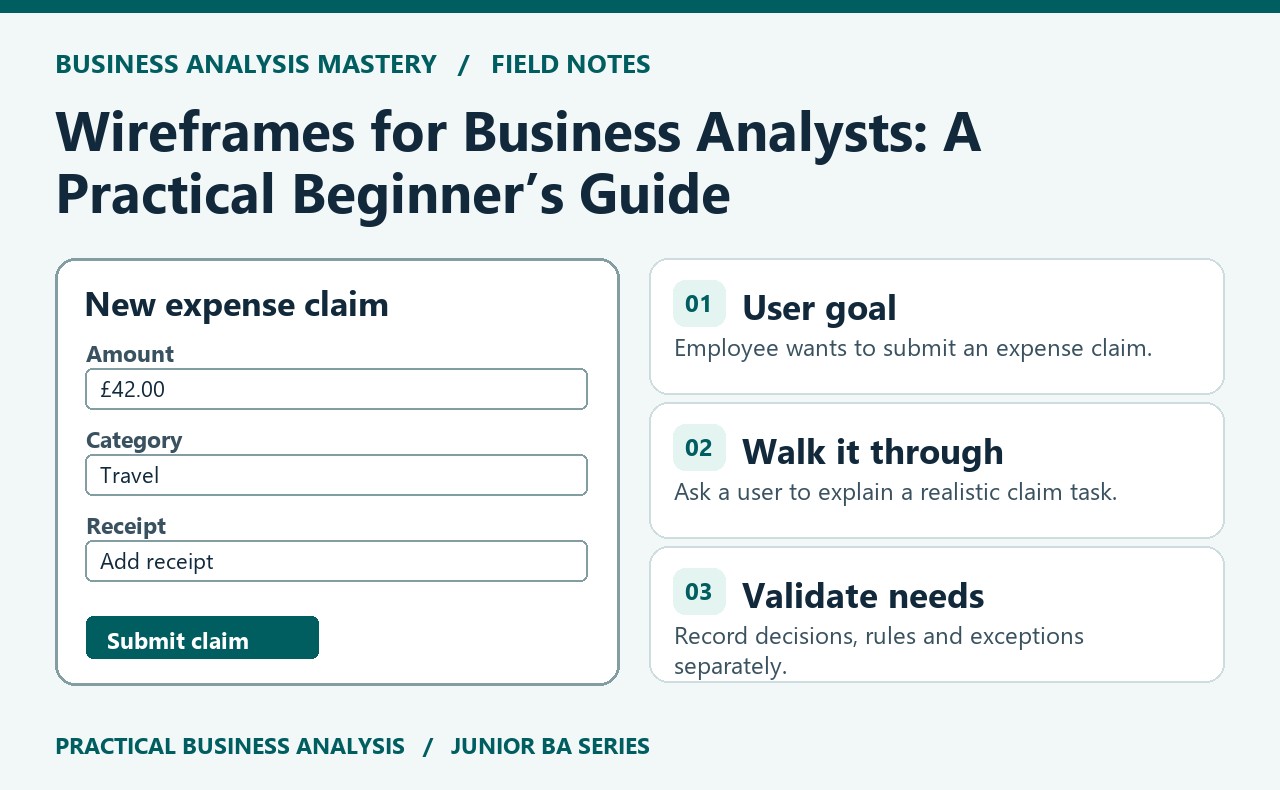
A wireframe is a simple outline of a screen or page. For a business analyst, it can make a conversation about user tasks and information clearer, while keeping attention on structure rather than visual styling.
Read article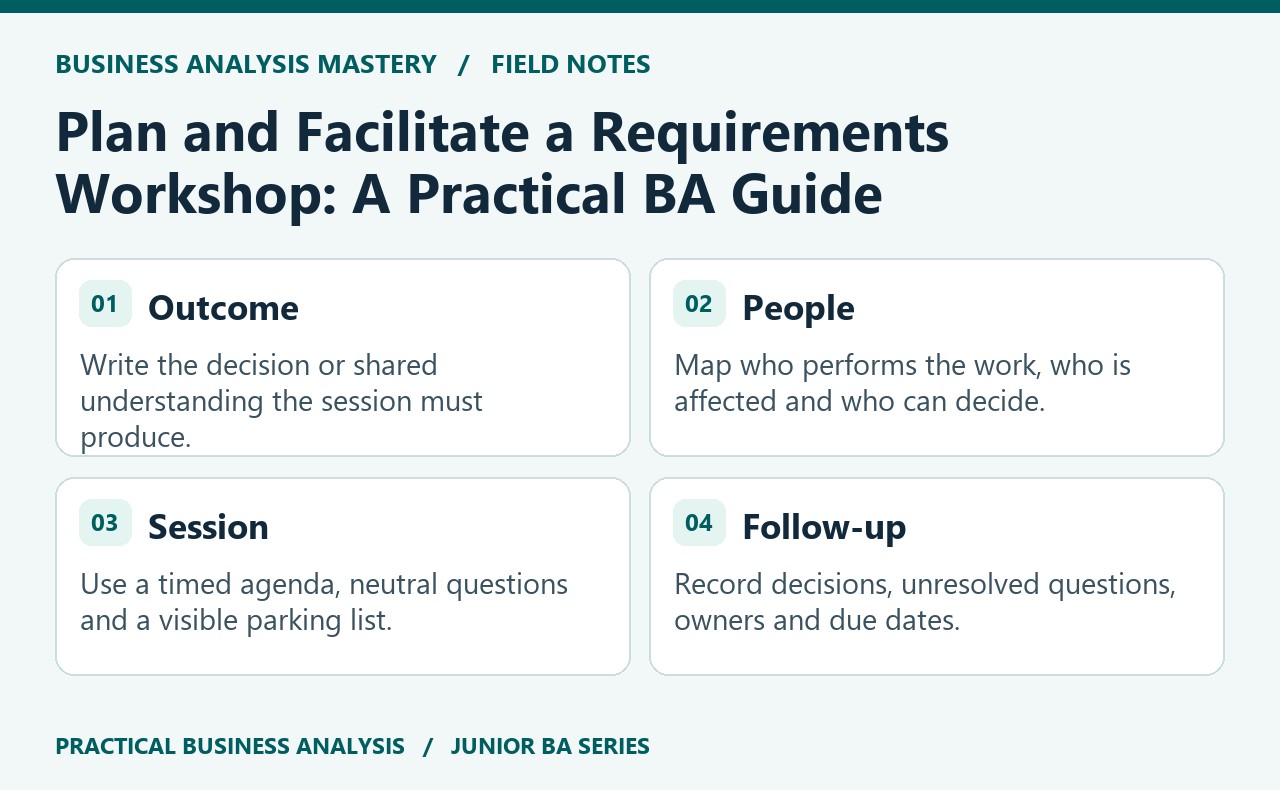
A well-run workshop helps a team resolve questions together. Use this practical sequence to make the time useful before, during and after the session.
Read article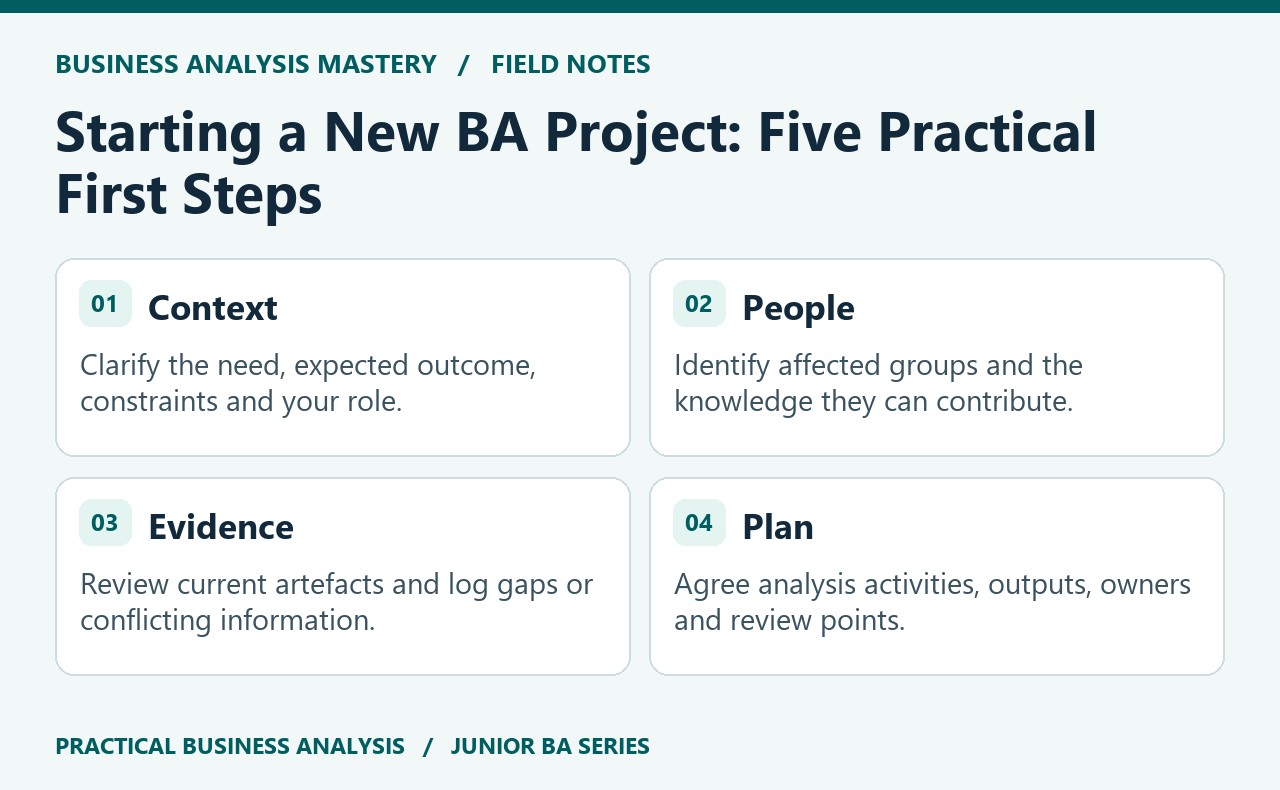
A new project can feel unclear even when the project plan looks complete. These first steps help a junior BA build context, ask useful questions and agree what to do next.
Read article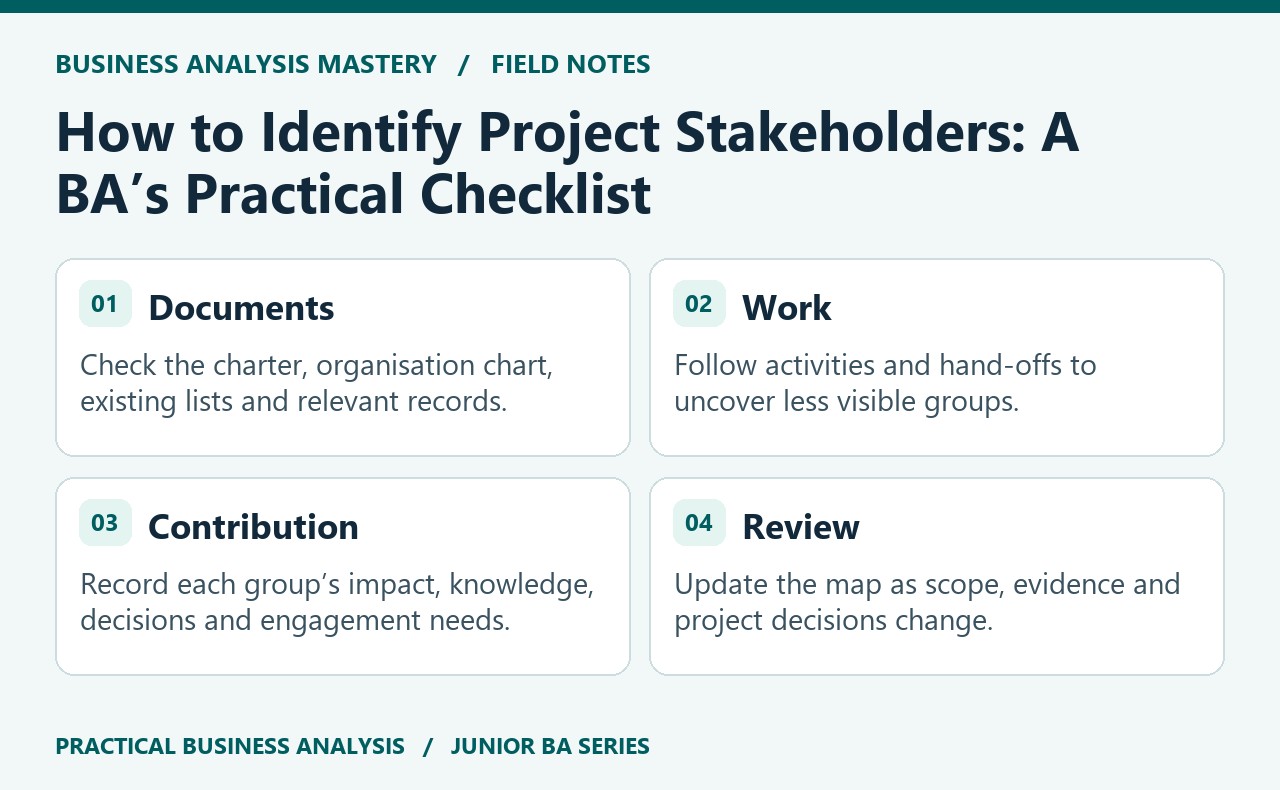
A stakeholder list is a useful start, but it rarely tells the whole story. Use these checks to find the people who shape, deliver or experience a project’s outcomes.
Read article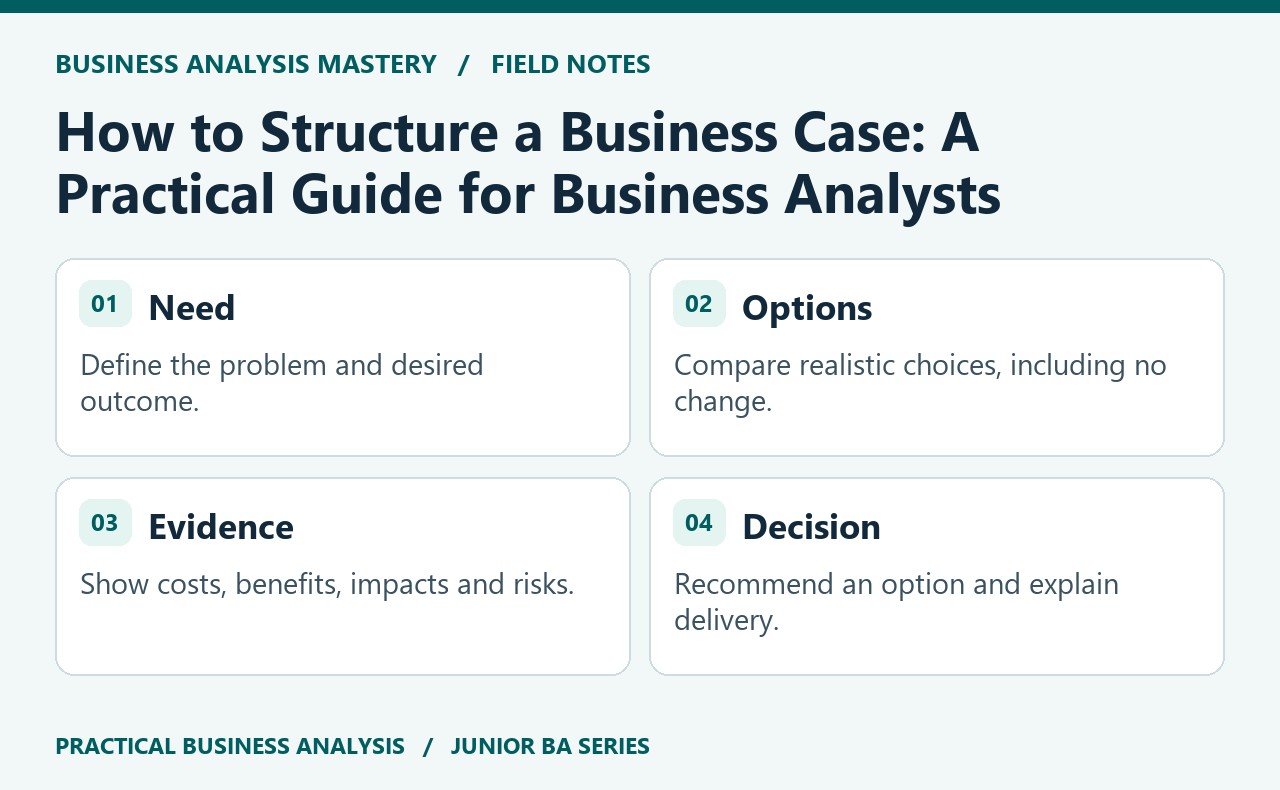
A business case helps decision-makers choose what to do and why. Use this structure to connect the problem, evidence, options and recommendation.
Read article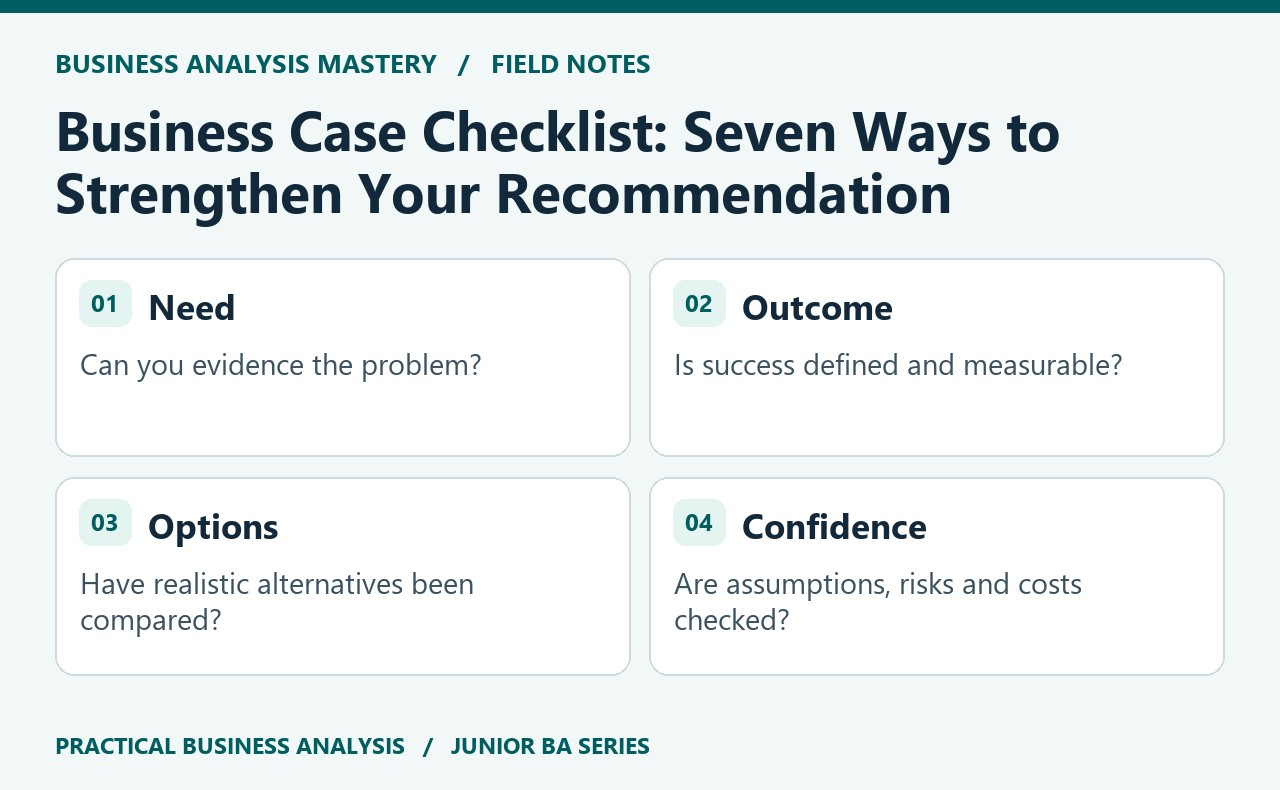
Before a sponsor review, use these seven questions to check whether your business case is clear, evidence-led and ready to support a decision.
Read article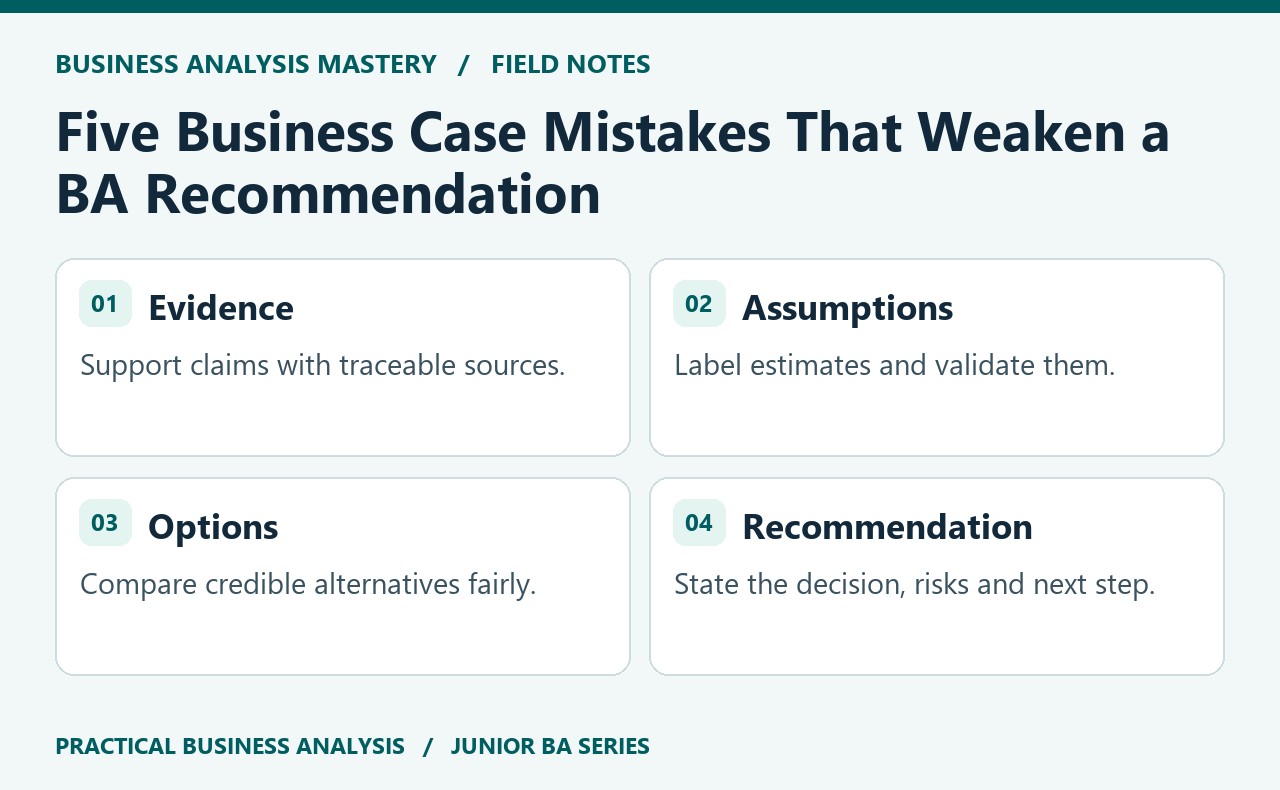
A sound recommendation can lose credibility when its evidence or reasoning is hard to follow. Spot these five problems before your business case reaches decision-makers.
Read article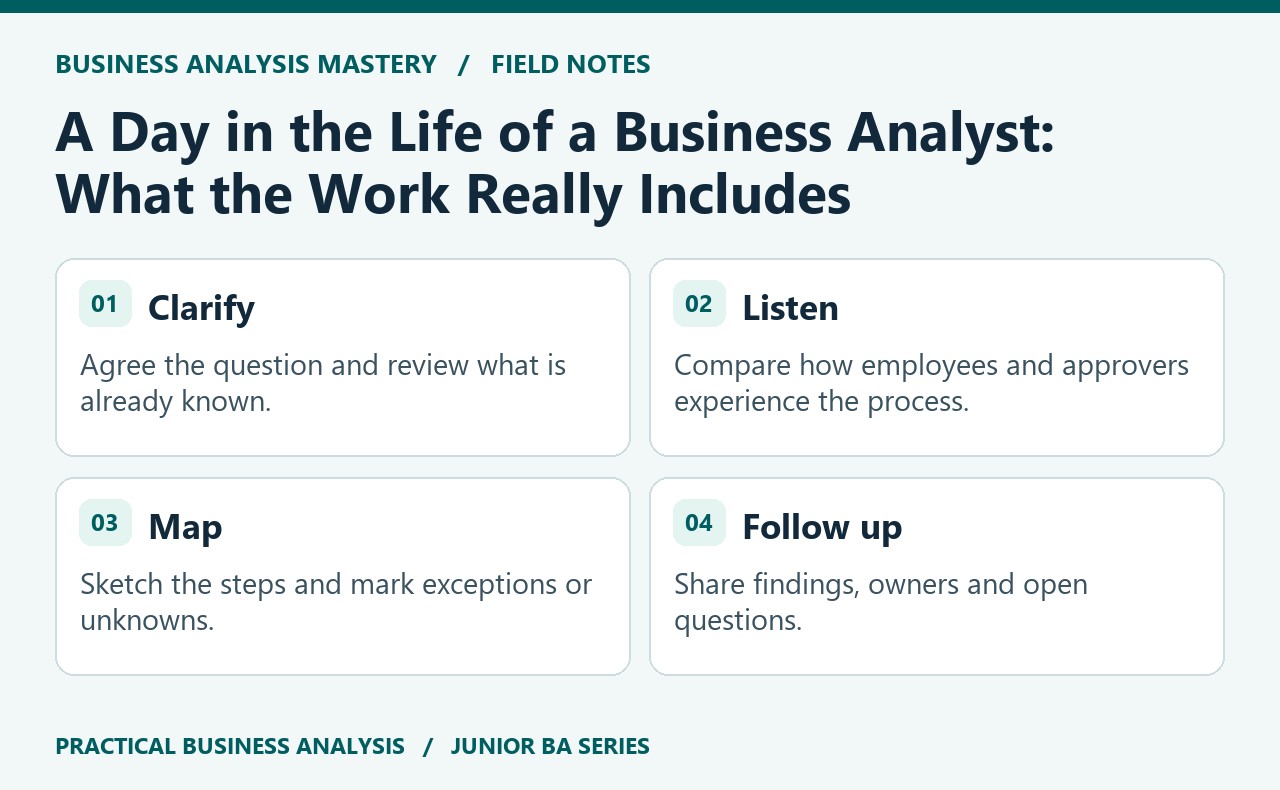
A BA’s day rarely follows one fixed pattern. This illustrative example shows how meetings and analysis can connect, and what a junior analyst can capture between them.
Read article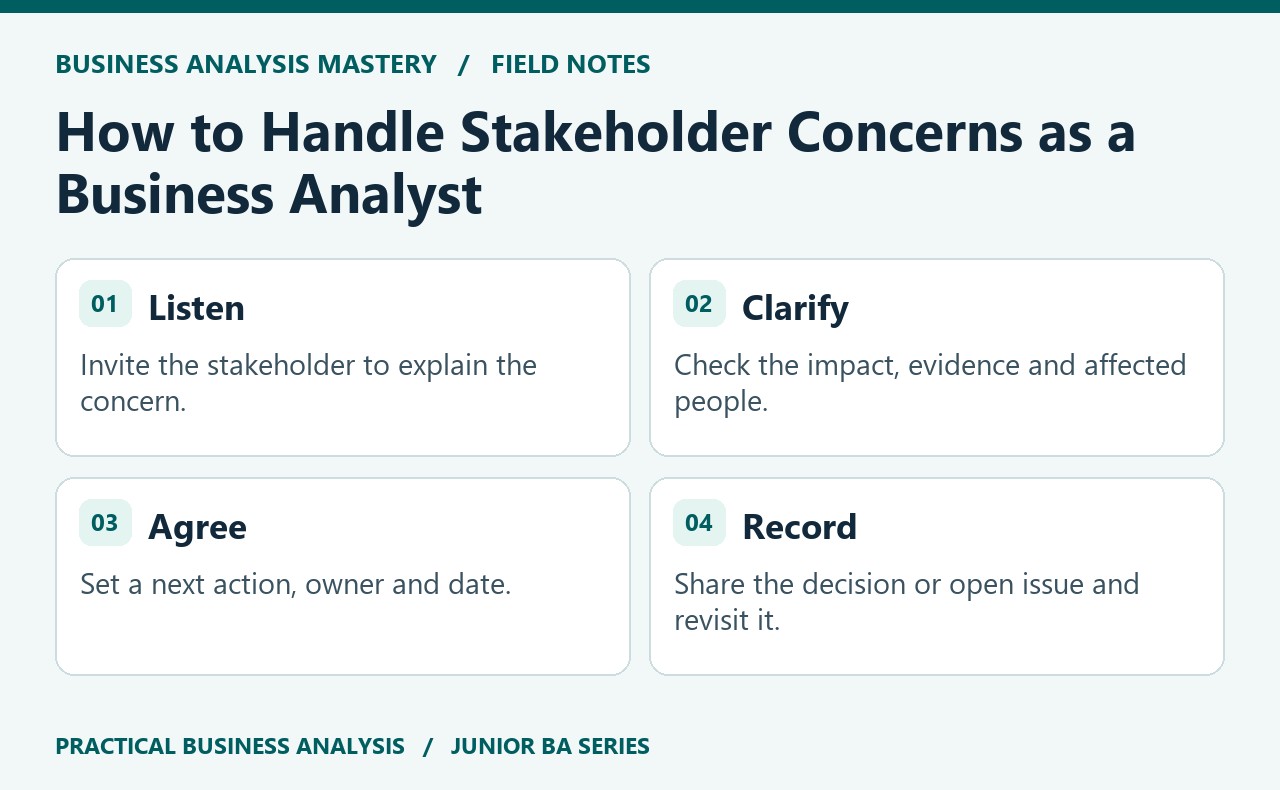
When someone challenges a requirement or delays a decision, focus on the concern and its context. A calm, structured conversation can help the team understand the impact and agree what happens next.
Read article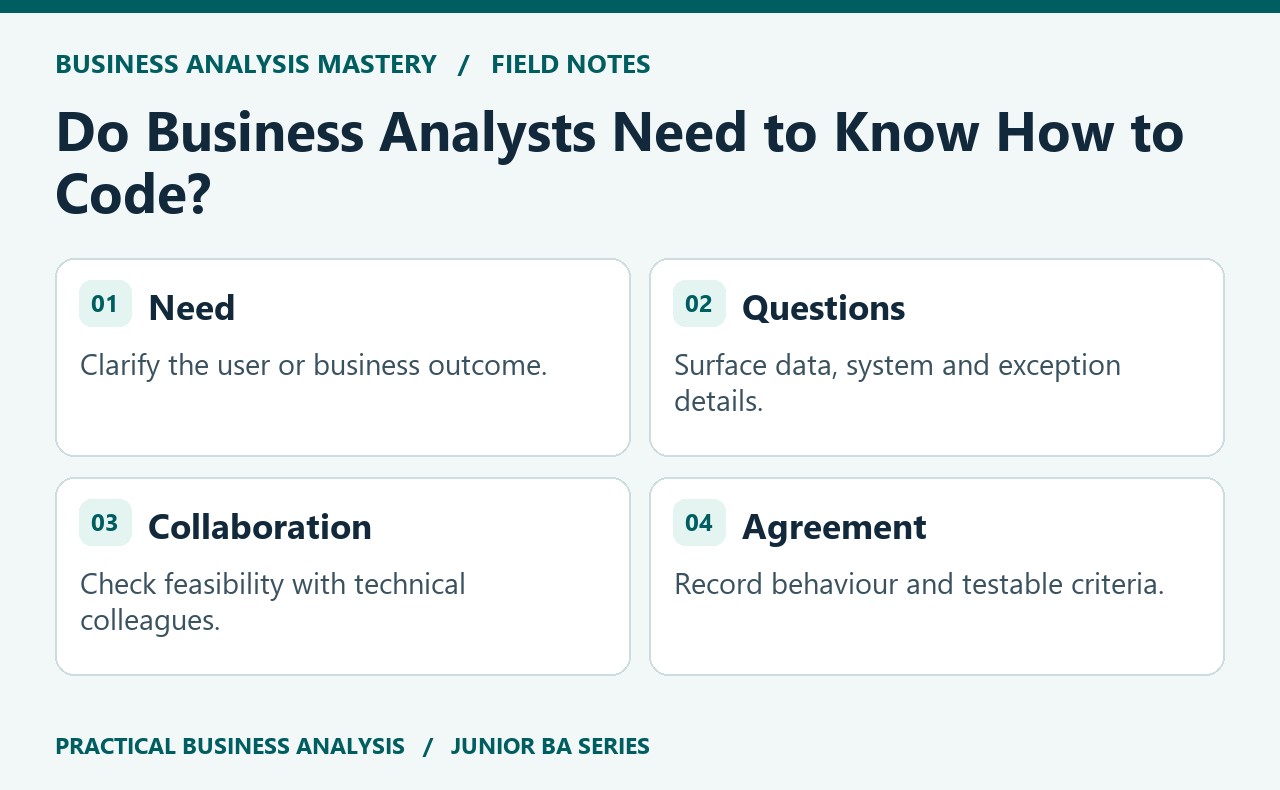
Technical understanding can help you ask sharper questions, clarify requirements and collaborate with delivery teams. See how that plays out in a worked example.
Read article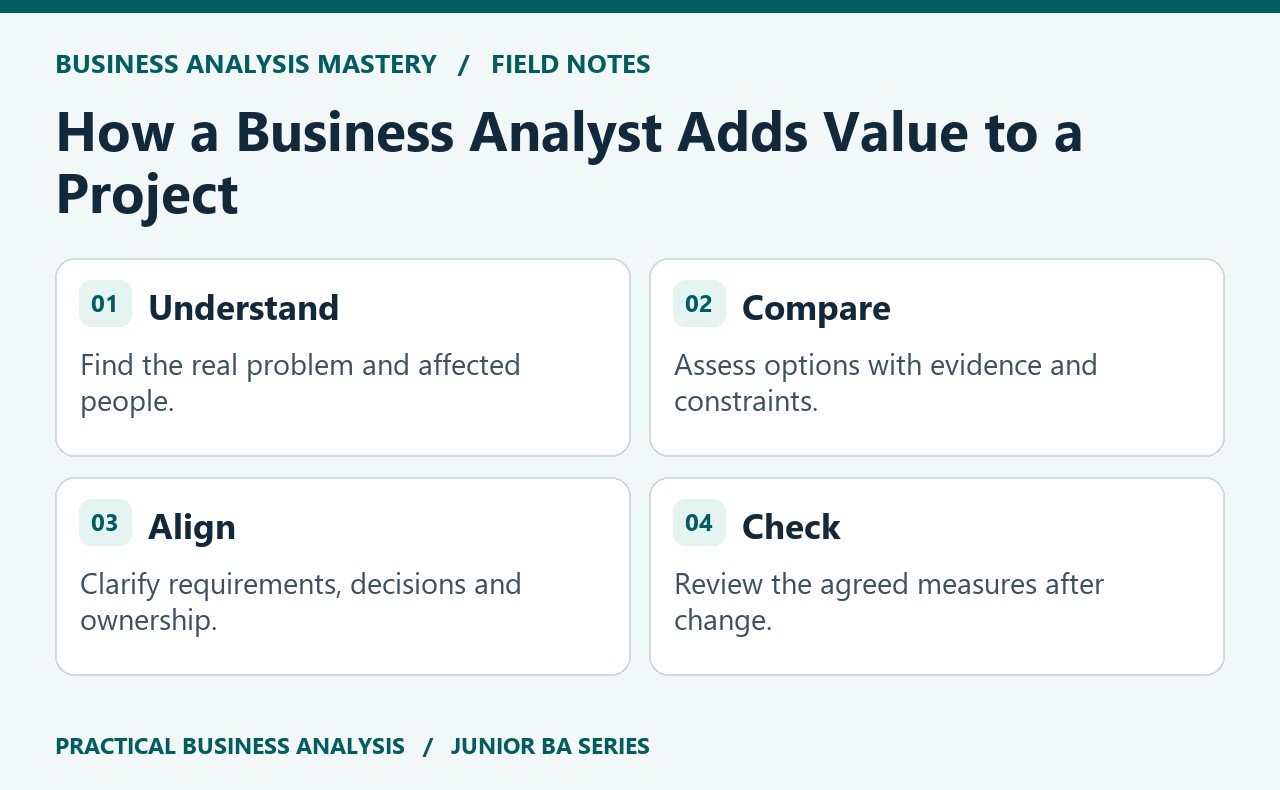
A BA’s value shows in the decisions and delivery they help make clearer. Follow one project example from an unclear problem to a checked outcome.
Read article