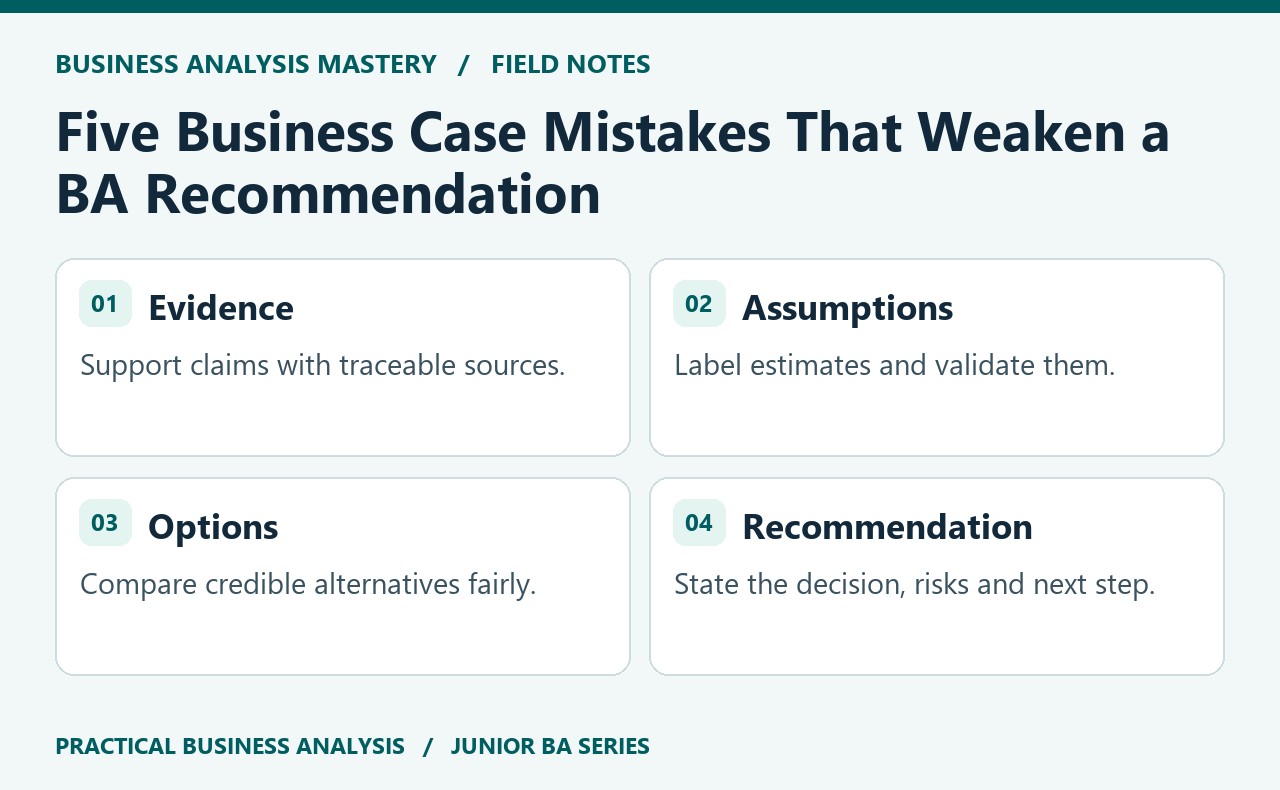
Five Business Case Mistakes That Weaken a BA Recommendation
A sound recommendation can lose credibility when its evidence or reasoning is hard to follow. Spot these five problems before your business case reaches decision-makers.
1. Making claims without showing the evidence
A statement such as “customers are dissatisfied” is difficult to assess on its own. Add the evidence behind it, such as complaint themes, survey results or service data. Include the source and explain any limits. If you have only a few examples, describe them as examples rather than presenting them as proof of a wider trend.
2. Treating assumptions as confirmed facts
Early estimates are often necessary, but readers need to know they are estimates. Mark assumptions about costs, demand, savings and delivery time. Ask Finance, operational leads and technical specialists to review the areas they know best. If an uncertain estimate could change the preferred option, show that sensitivity clearly.
3. Comparing one solution with nothing
A business case should explain the decision, not sell a predetermined tool. Include a realistic range of options, such as improving the current process, changing guidance or introducing technology. Keep the baseline option too. Compare each against the same agreed outcomes and note why any apparently plausible option is not taken forward.
4. Leaving Finance or delivery colleagues out
A BA can organise the analysis, but should not validate every specialist estimate alone. Work with Finance on financial treatment and with delivery or service colleagues on feasibility, resources and ongoing support. This avoids presenting a purchase price as the whole cost or counting benefits that the organisation cannot realise.
5. Hiding the risks or burying the recommendation
A long document can still fail if readers cannot find the decision it asks them to make. Put the problem, options, preferred recommendation and required approval near the front. Cover material risks, dependencies and impacts, including what could prevent benefits from being achieved. Use appendices for detailed evidence, not to conceal a difficult point.
Worked example: replacing a shared inbox
A team proposes buying a request-tracking tool because requests are sometimes missed. A weak case might claim the tool will save time, list only the preferred product and omit support costs. A stronger case measures the current problem, checks the estimate with staff, compares process improvements with a tool, and includes setup, training and ongoing administration. It names adoption and data-handling risks, then recommends a pilot with success measures if uncertainty remains.
This approach keeps the case practical: evidence first, collaboration on specialist questions, and a decision proportionate to what is known.
Use a final quality check
Before submission, ask someone unfamiliar with the work to explain the problem, options and recommendation back to you. If they cannot, simplify the narrative or make missing evidence visible. Check the local template and approval requirements as well.
For a complete section-by-section approach, read the BA Mastery business case structure guide. The seven-point business case checklist offers a companion review before sponsor discussion.
