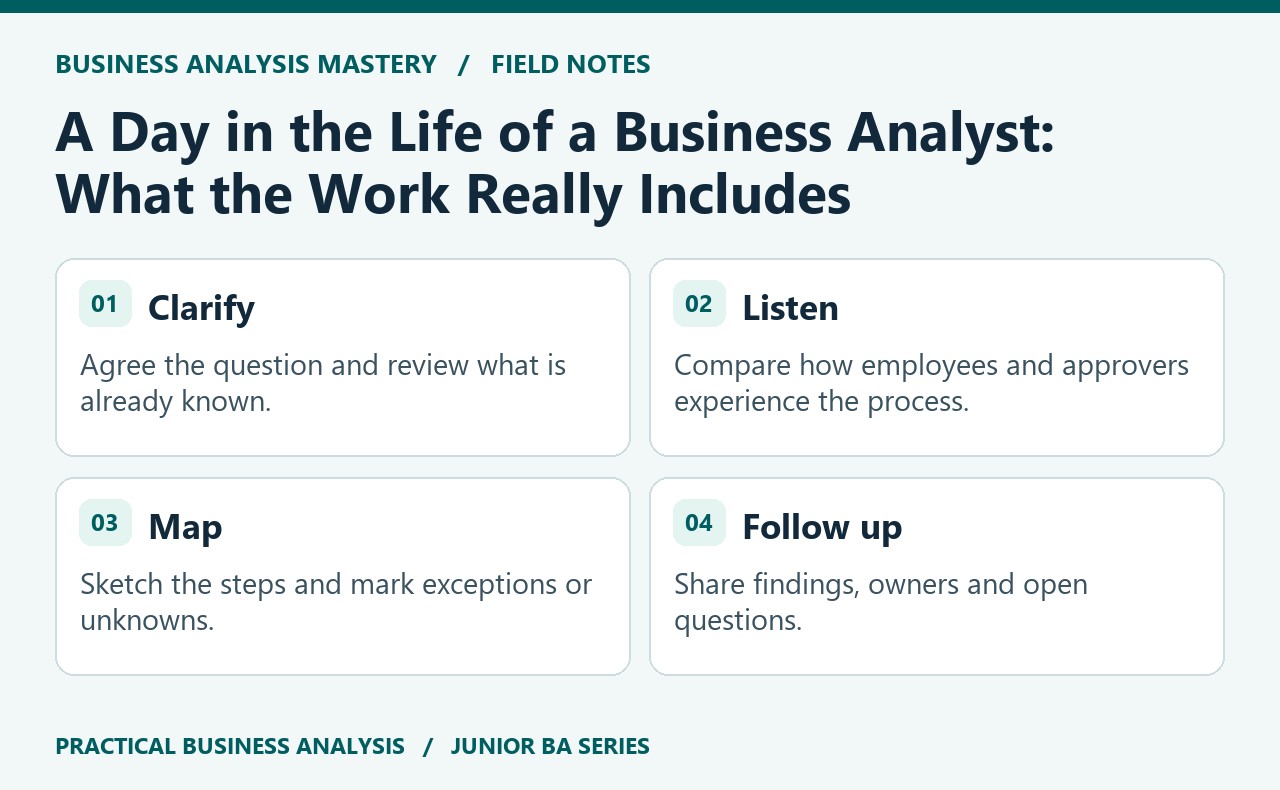
A Day in the Life of a Business Analyst: What the Work Really Includes
A BA’s day rarely follows one fixed pattern. This illustrative example shows how meetings and analysis can connect, and what a junior analyst can capture between them.
A varied day, not a fixed timetable
Business analysis work changes with the project, team and stage of delivery. One day may include a stakeholder discussion, a requirements review, a process sketch and time to follow up on decisions. The useful thread is not the number of meetings; it is how each activity improves shared understanding or helps the team decide what to do next.
Treat the outline below as one possible day, not a standard schedule. Your project may be remote or in person, use different delivery methods, or need more observation and less workshop time. Ask your project lead how analysis work is planned and where decisions and actions are recorded.
Morning: understand the question
A short check-in with the project manager might clarify the priority for the week: understand why expense claims are taking longer to approve. Before speaking with stakeholders, review relevant project documents and note what they do and do not explain. Prepare a few open questions, such as where a claim waits and what information is missing when it reaches an approver.
Midday: listen, map and test assumptions
In a conversation with an employee and an approver, you may hear different descriptions of the same process. The employee says a claim is submitted in one step; the approver describes a queue and an occasional request for a missing receipt. Capture the roles, events, pain points and exceptions without deciding too quickly that a new screen is the answer.
A simple process sketch can help everyone check the sequence: prepare claim, submit, review, request more information or approve. Label uncertain steps as questions. Ask the participants whether the map matches their experience and what happens when the approver is unavailable.
Afternoon: turn findings into usable outputs
After the discussion, separate confirmed facts from assumptions and proposed changes. Record a decision if the group agrees on one, assign an owner to each open question, and write requirements only where there is enough evidence. For example, the statement “Approver receives a notification” is not complete until the team understands which claims trigger it, what information it contains and how exceptions are handled.
Before the day ends, send a concise summary: what was learned, what remains unclear, who will follow up and when. This gives participants a chance to correct misunderstandings while the conversation is fresh. Keep the process map and notes in the agreed project location so the team can find them.
Look for the useful thread
Meetings, diagrams and documents are tools; the work is connecting evidence to decisions and clear next steps. As a junior BA, make your contribution visible by asking focused questions, noting uncertainty and confirming what others understood. The mix of activities will differ from one project to another, but a repeatable habit of listening, analysing and following through helps keep the work grounded.
