How to Handle Stakeholder Concerns as a Business Analyst
When someone challenges a requirement or delays a decision, focus on the concern and its context. A calm, structured conversation can help the team understand the impact and agree what happens next.
Describe the situation, not the person
Stakeholders may disagree, raise repeated questions or be unable to make time for a decision. Calling someone “difficult” can hide the reason: they may be accountable for a risk, lack information, have competing priorities or see an impact the project has missed. Your role is to understand the concern and help the right people resolve it, not to guess at motives.
Start by describing observable behaviour and its effect. For example: We have not confirmed the approval rule, so the team cannot complete the requirement review. This keeps the discussion specific and gives everyone a shared issue to address.
Listen and clarify the impact
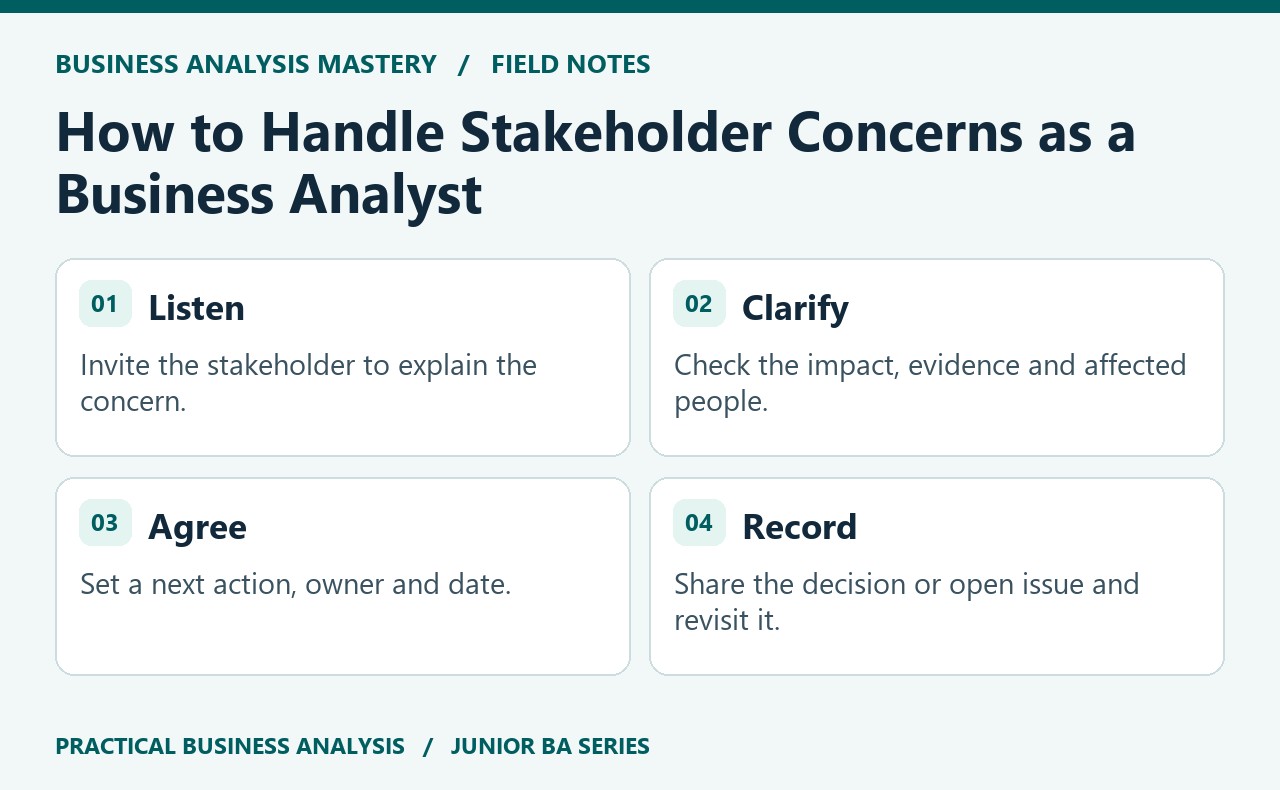
Ask an open question, then give the stakeholder room to explain. What would you need to see before you could agree? may reveal a missing policy, data point or affected group. Reflect back the concern in neutral language and check that you have understood it correctly.
Suppose a finance lead objects to automatically approving low-value expenses. Rather than repeating the proposed threshold, ask what risk they are trying to control. They may explain that some categories require review regardless of amount. That distinction changes the rule and gives the team something concrete to investigate.
Agree a practical next step
Separate the concern into facts to verify, options to consider and decisions that need an owner. You might agree that finance will provide the current policy, the BA will compare it with sample claims, and the project manager will schedule a decision meeting. Set a date and confirm who should attend.
If the disagreement is about scope or priority, make the trade-off visible. Explain which outcome, cost, risk or timeline may be affected, using evidence where available. Avoid promising that a particular option is harmless until the relevant people have assessed it.
Record and revisit
After the conversation, record the concern, relevant evidence, agreed action, owner and due date in the project’s usual log or decision record. Share a short summary with the people involved so they can correct any misunderstanding. Update the requirement or process notes only when the decision is clear, and retain the reason for any change.
If the issue remains unresolved or is affecting a committed decision, discuss the appropriate route with your project manager or analysis lead. Bring a factual summary and the options already explored. Escalation can help clarify ownership or priority, but it should follow an attempt to understand the issue and agree a reasonable next step.
Keep the conversation constructive
Respectful curiosity is a practical analysis skill. Listen for the impact behind a concern, check your assumptions and make follow-up visible. The aim is not to secure agreement at any cost; it is to help the team understand the issue and make an informed decision.