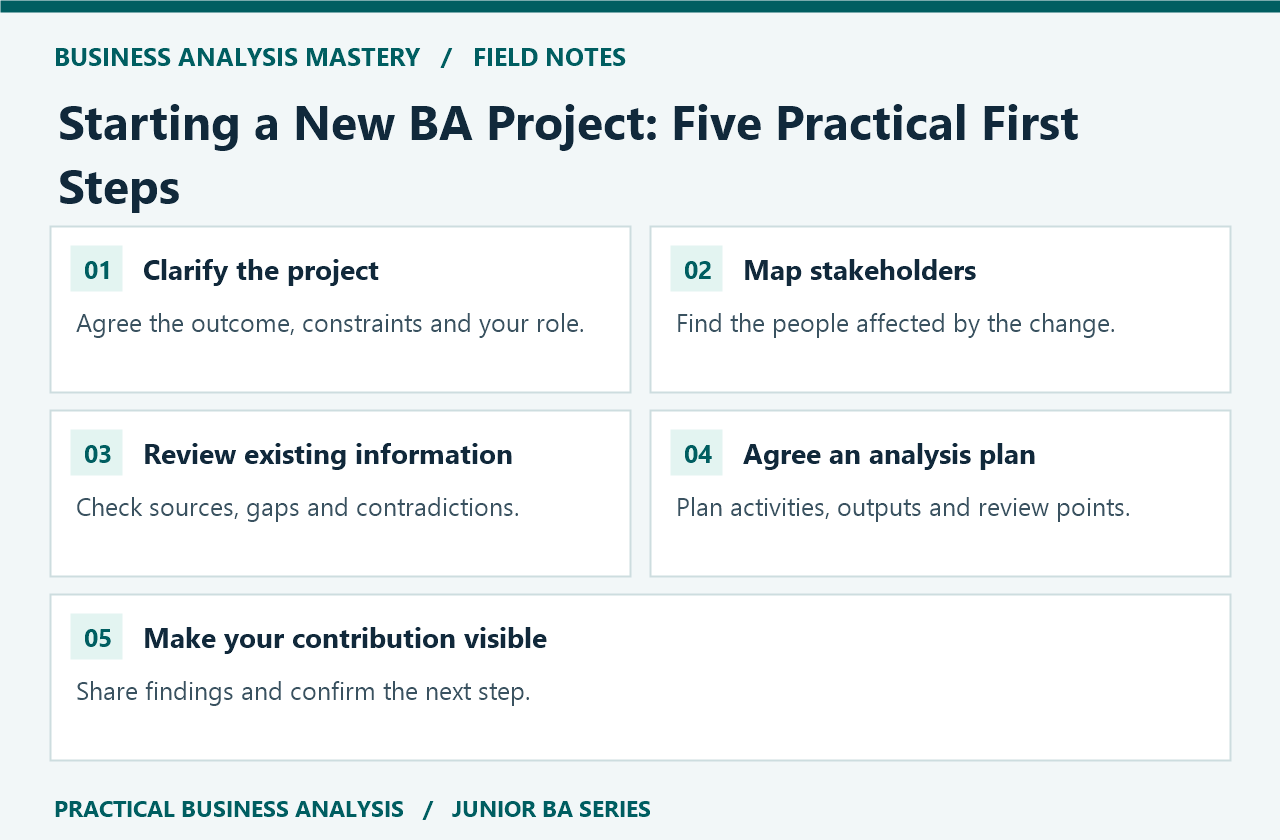
Starting a New BA Project: Five Practical First Steps
A new project can feel unclear even when the project plan looks complete. These first steps help a junior BA build context, ask useful questions and agree what to do next.
1. Clarify the project with the project manager
Ask why the work exists, what outcome is expected, what stage it has reached and which decisions have already been made. Clarify your responsibilities, reporting line and how your analysis will be reviewed.
If a project requests an online appointment form, do not assume that is the underlying need. Ask what users struggle with and how success would be measured. Note constraints and dependencies, separating confirmed facts from assumptions and questions.
2. Build an initial stakeholder picture
Ask who uses, supports, funds, delivers or is affected by the change. Treat the stakeholder list or project initiation document as a starting point. People closest to the work may identify teams, customers or suppliers missing from the formal structure.
Record each person or group, their connection to the work, what they can explain and how to involve them. Learn their perspective in conversation and update the map as the project develops.
3. Review existing information before requesting more
Review policies, process descriptions, service measures, past decisions, customer feedback, known issues and system information. Find the authoritative versions, check dates and owners, and note access restrictions.
Log what each source explains, what remains unanswered and where sources disagree. A cancellation policy may differ from how support staff handle exceptions; investigate the gap. Keep a source list so findings can be traced.
4. Agree an analysis approach and plan
Plan the activities, participants, outputs and review points. You might observe the process, interview staff, run a workshop, compare options and validate findings. Sequence work around decisions and people’s availability. For the booking example, you could first map the existing journey, then check the exceptions with staff before agreeing which user groups need to review future options.
Agree the plan with the project manager. Confirm analysis boundaries, decision authority and how new requests will be handled. Update the plan when evidence or priorities change, explaining any effect on dates or outputs. Keep a short action list with owners so interviews, access requests and review sessions do not disappear into meeting notes.
5. Make your next contribution visible
Share a short summary of the goal, what is known, what remains uncertain and the next activity. Invite corrections before a misunderstanding becomes expensive. For instance, send the current process sketch to two people who perform the work and ask them to mark steps or exceptions you have missed.
You do not need every answer. Help the team ask better questions and use evidence. An agreed current-process view or validated user questions can be a better first milestone than a premature solution. Make the next step visible by confirming who will review the output and when you will bring the findings back to the team.